Three days on the Skellan Ridge, hut to hut
Forty-one kilometres, two huts, one genuinely bad step, and the best sunset I’ve seen from a bunk window. A full route report, with the timings I actually walked.
The Skellan Ridge doesn’t look like much on the map. It’s a long, thin wrinkle of high ground, never quite reaching the height of the summits around it, and the guidebook gives it a single paragraph. That paragraph is why I went. Anything that gets one paragraph usually has room for a few days of your life.
I walked it west to east over three days at the end of August, sleeping in the two huts along the crest. This is the route as I found it, with the timings I actually walked (slower than the signposts, faster than I feared), the one section that deserves its reputation, and what I’d do differently.
The route at a glance
The traverse starts at the end of the valley road above Kettlemouth and finishes at the old quarry car park at Brannock, where a twice-daily bus takes you back down the valley. You don’t need a car at either end, which is half the appeal.
- Day 1: Kettlemouth road end to Hollin Hut. 12 km, 1,350 m of ascent. Most of the climbing.
- Day 2: Hollin Hut to Tarn Saddle Hut. 16 km, 900 m of ascent. The long, high day, with the bad step.
- Day 3: Tarn Saddle Hut to Brannock. 13 km, 650 m up and a knee-testing 1,700 m down.
Both huts are staffed in summer and need booking ahead. Hollin sleeps twenty-two; Tarn Saddle sleeps fourteen and fills first, so book that night before anything else.
Day one: the long pull to Hollin Hut
The first two hours are forestry track, wide and dull, and the best thing you can do is walk them early, before the sun clears the valley wall. I left the road end at 7:10 and was out of the trees by 9:00, which put the steep grass slope above in shade for most of the climb.
That slope is the crux of the day. The path zigzags up 600 m of grass with no real let-up, and it’s the kind of ground where the summit you can see is never the summit. I stopped looking up. I counted fifty steps, stopped for ten breaths, and went again. It isn’t elegant, but it got me to the col by 11:40 with something left.
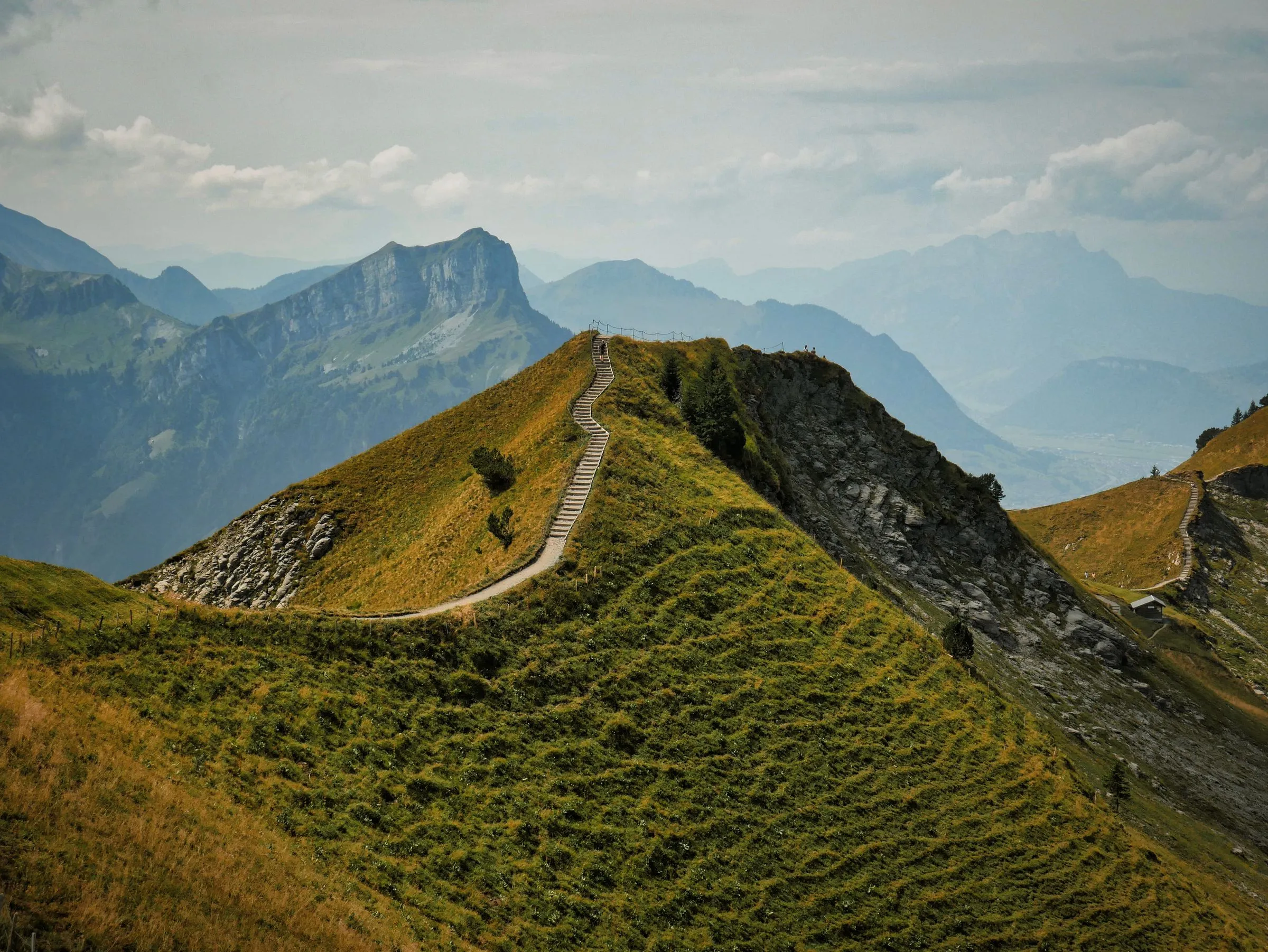
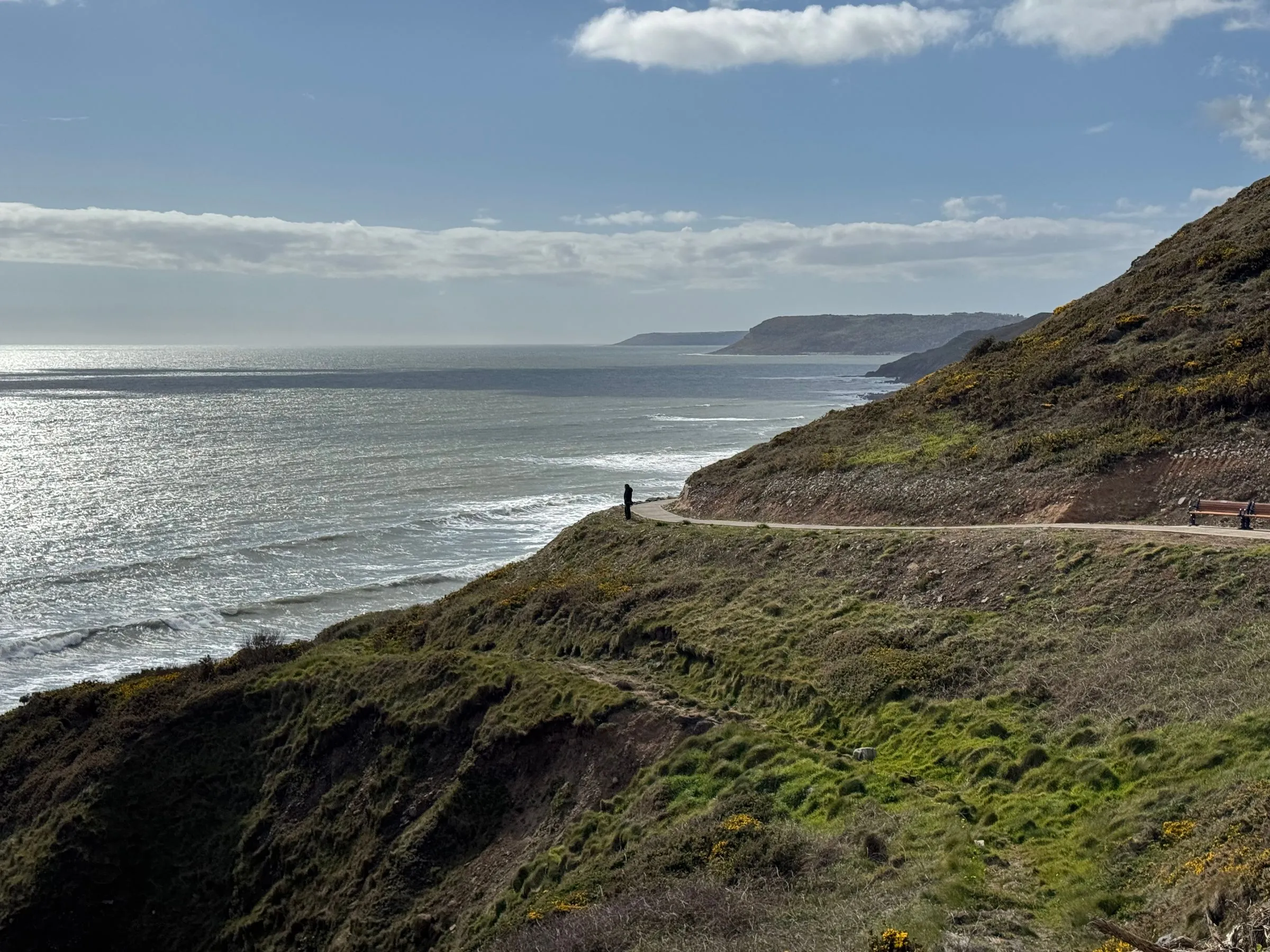
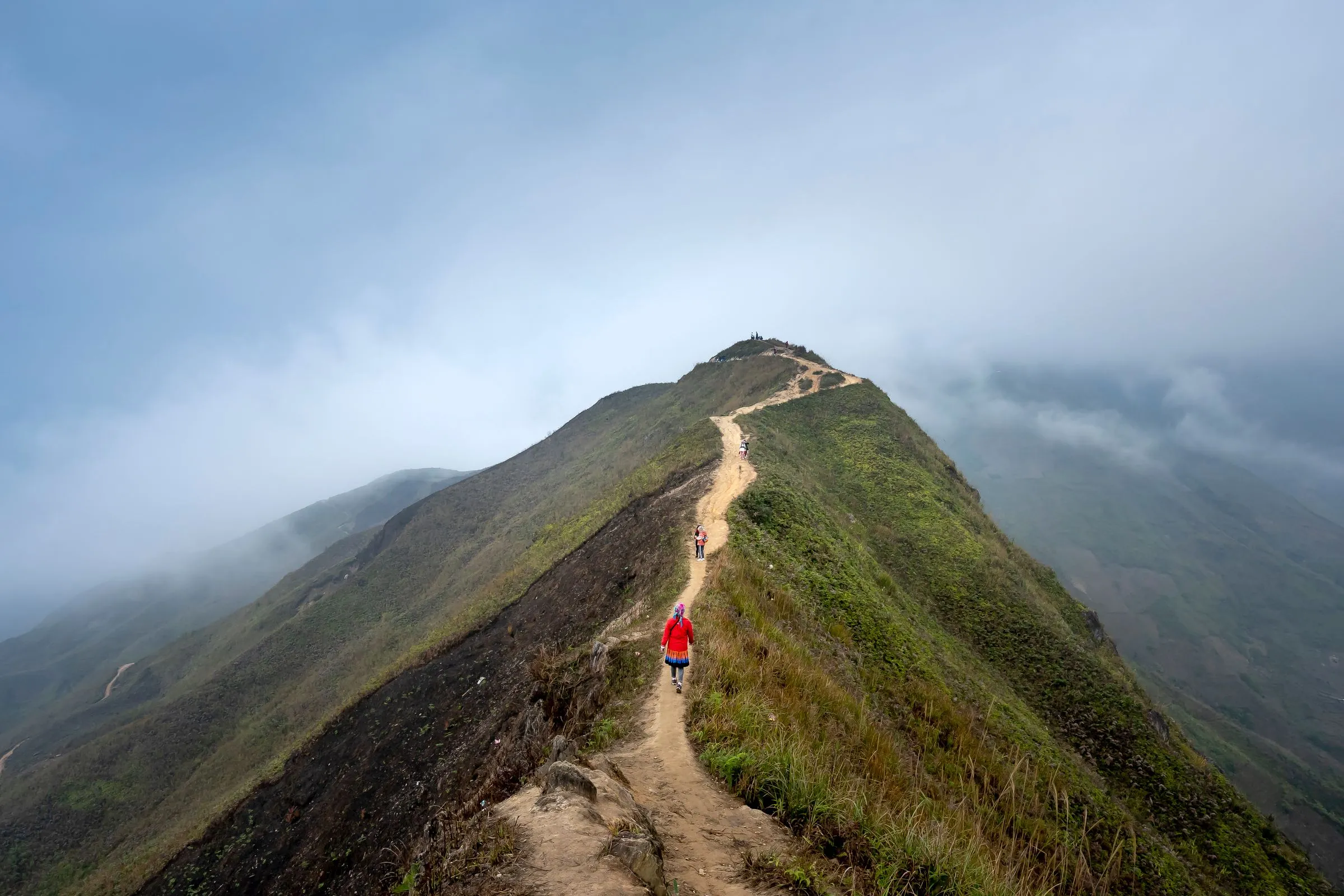
From the col, the ridge proper begins, and everything changes. The path narrows to a single line through short turf, the ground drops away on both sides, and you can see the whole of the next two days laid out to the east: a long, rising and falling crest, with Tarn Saddle as a notch in the far distance.
Hollin Hut appears late and suddenly, tucked just below the crest on the south side. I arrived at 14:30, which was early enough to get a bottom bunk by the window and late enough to feel I’d earned it.
Where the water is: the hut’s tap is fed from a spring and was running well in late August. There’s no reliable water on the climb itself, so carry two litres from the road end.
Day two: the high crest and the bad step
Day two is why people do this route. It’s 16 km of almost continuous ridge, rarely dropping below 1,800 m, with views that don’t stop.
It also has the step. About two hours east of Hollin, the crest narrows to a rock fin for perhaps forty metres, and there’s one move down a sloping slab with a long drop on the north side. There’s a fixed chain. It’s not technical climbing, and in dry weather most walkers will be fine, but it’s the one place on the route where a slip would be serious.
How I handled it
I took my poles off and strapped them to my pack before I reached it, so both hands were free. I faced in, kept three points of contact, and went slowly. It took about four minutes. The couple behind me sent their packs down on a short cord first, which looked sensible.
If it’s wet or windy, don’t. There’s a signed bypass path on the south side that drops about 150 m and climbs back up to the crest. It adds roughly forty-five minutes. If the rock is wet or the wind is pushing you north, take it without a second thought. Nobody at the hut will ask which way you came.
After the step, the ridge broadens again, and the afternoon is the easiest walking of the trip: a long, gentle rollercoaster of grassy tops. I ate lunch on the third of them and watched cloud pour over the col I’d crossed that morning.
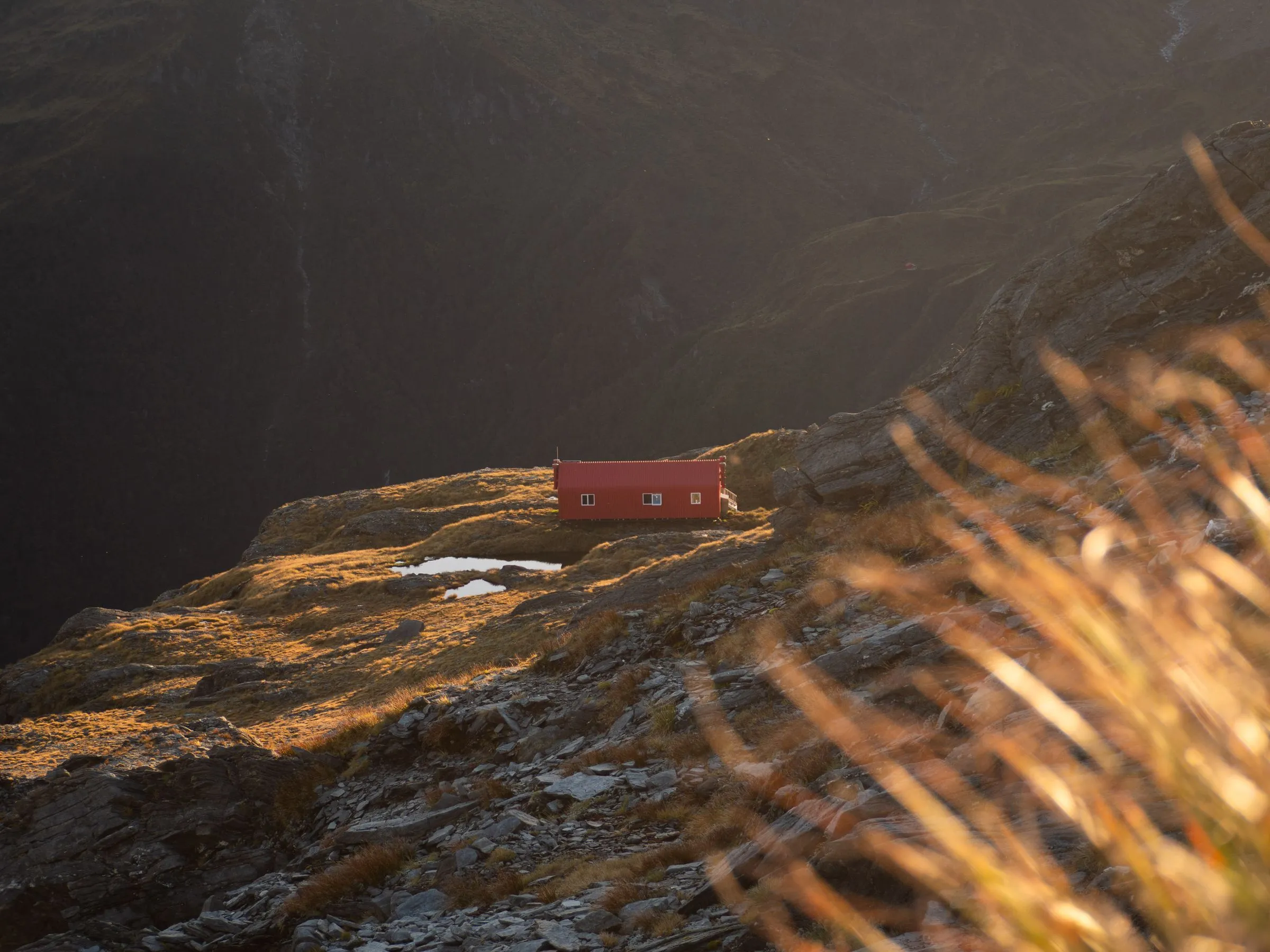
Tarn Saddle Hut sits right on the col, with a small tarn just below it and nothing between you and the western sky. I got in at 16:15. Dinner was lentil stew and a slab of bread the warden had baked that morning, and at 20:40 the whole hut went quiet and lined up at the windows to watch the sun go down behind the route we’d just walked.
Day three: the long descent to Brannock
The last morning starts with a short climb to the final top, which is worth doing slowly because it’s the last of the views. After that, it’s down.
The descent to Brannock loses 1,700 m in about 8 km, first on a steep, eroded path through scree, then on a long stony track through the old quarry workings. It’s hard on the knees and it goes on longer than you think. I was glad of my poles here, and gladder of the café by the bus stop, which does a very good cheese scone.
The bus leaves Brannock at 13:10 and 17:40. I made the earlier one with ten minutes to spare, which I’d recommend, because the 17:40 is the one everyone else is on.
What I’d pack again (and what I wouldn’t)
Hut-to-hut means you don’t carry a tent, stove or sleeping mat, and the pack drops to something genuinely comfortable. Mine weighed 7.2 kg including water and lunch.
Glad I had:
- A hut sleeping bag liner (required in both huts, and you can’t rent one at Tarn Saddle).
- Light trekking poles that fold small enough to stow for the step.
- A warm hat and thin gloves. It was 4°C at the window at 6:00 on day two, in August.
- Cash. Neither hut takes cards reliably, and the card reader at Hollin had given up entirely.
Didn’t need:
- A full first aid kit sized for a week. A small one is plenty with staffed huts each night.
- A second fleece. The huts are warm, and one fleece plus a waterproof covered every stop.
Is it worth it?
Yes, if you’re comfortable on a narrow path with drops either side and can turn back, or around, if the weather says so. The Skellan Ridge has none of the big-name summits, which means it has none of the queues. On the whole of day two, I met eleven people.
If you’ve never done a hut-to-hut trip, this isn’t the gentlest introduction, but it’s a very good second one. Do a single night at Hollin first, walk back the way you came, and see how the ridge feels. Then come back for the whole thing.