Paddling the Orrin Lakes after the crowds go home
Four lakes, three portages, two nights’ worth of mist, and not another boat for most of a day. Why late September is the best time to paddle the Orrin chain.
In July, the Orrin Lakes are lovely and very busy. Hire boats queue at the first launch, the good campsites are taken by mid-afternoon, and the portage paths have a steady traffic of people carrying cool boxes. I went back in the last week of September, after the hire place had shut for the season, and had a different place to myself.
The chain, and how it fits together
There are four lakes, linked by short portages, running roughly north to south: Upper Orrin, Long Water, Mere Hollow and Lower Orrin. You can paddle them in either direction, but north to south puts the prevailing wind behind you on Long Water, which is the one open stretch where it matters.
- Upper Orrin to Long Water: 400 m portage, well made, with a boat trolley rail for the first half.
- Long Water to Mere Hollow: 250 m, steep and rooty at the far end. Two trips.
- Mere Hollow to Lower Orrin: 600 m, the longest, but flat and wide.
I paddle a 4.3 m touring kayak, which is light enough to shoulder for the short carries and goes on a folding trolley for the long one. A canoe would be easier on the portages and slower into a headwind.
Day one: Upper Orrin and the long water
I launched from the north jetty at 9:30 into flat calm, with mist still lifting off the water in slow, separate patches. Upper Orrin is small and wooded, and it’s easy to dawdle along its shoreline. I did, for an hour, watching a heron work the shallows near the inlet.
Long Water is a different animal: four kilometres of open lake, running straight down a valley that funnels the wind. By noon a light southwesterly had built a short chop. It was never difficult, but it was the one stretch where I was glad of a spray deck and of having checked the forecast for gusts, not just average wind speed.
I stopped for lunch on the shingle spit halfway down, then pushed on to the second portage, which is where I learned the steep end is steeper with a loaded boat. Two trips: boat first, then bags.
Where I camped, and the morning
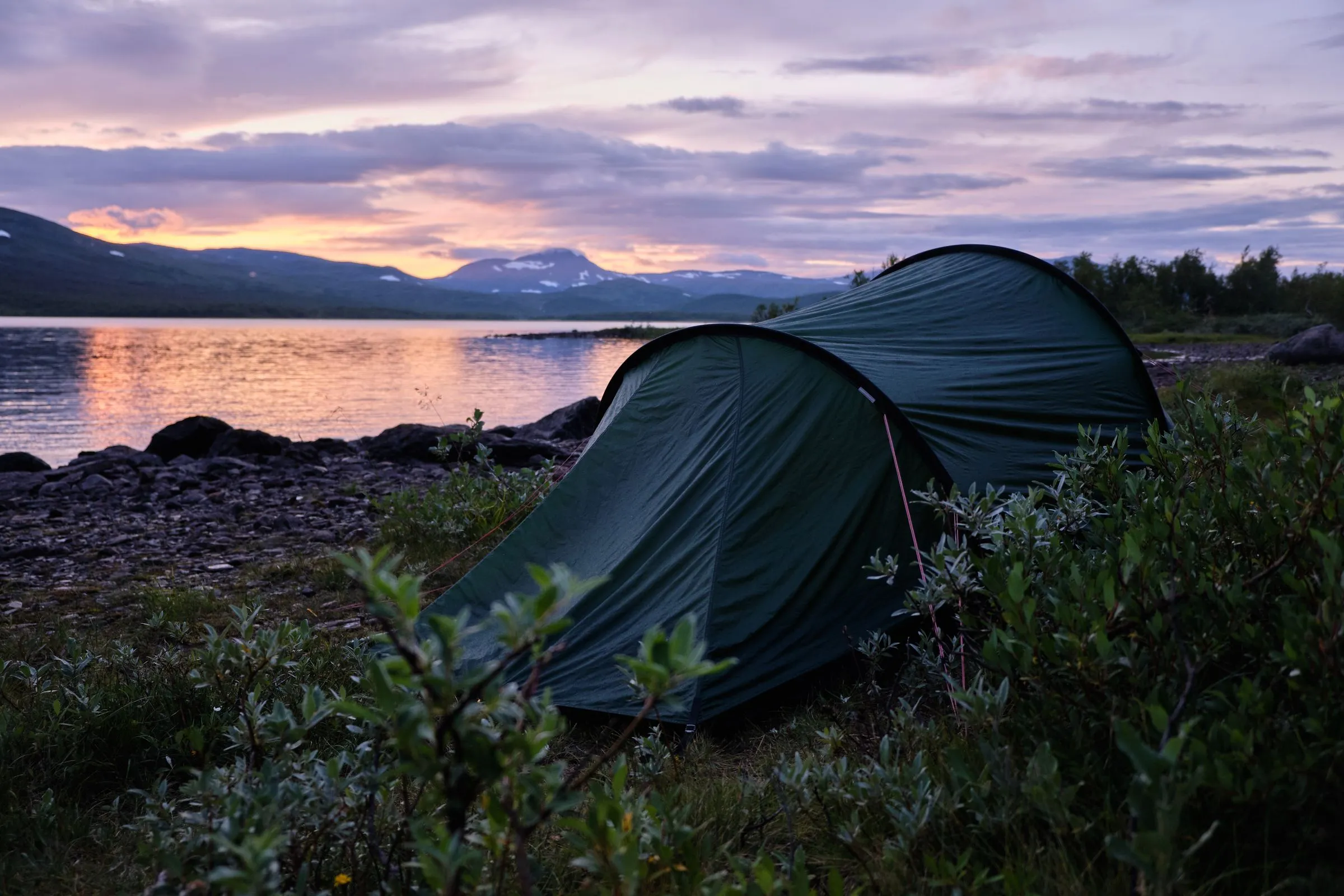
There’s a small wild camping area on the east shore of Mere Hollow, marked by a single wooden post, with room for perhaps four tents. In summer you’d be lucky to get a pitch after 15:00. I arrived at 15:40 to an empty clearing and a sky that was already turning gold.
Nights are cold here by late September. It got down to 3°C and the inside of my tent was damp by morning, which is the trade for the empty lake. A warm camp layer and a dry pair of socks kept for sleeping made the difference, the same as on any three-season night out.
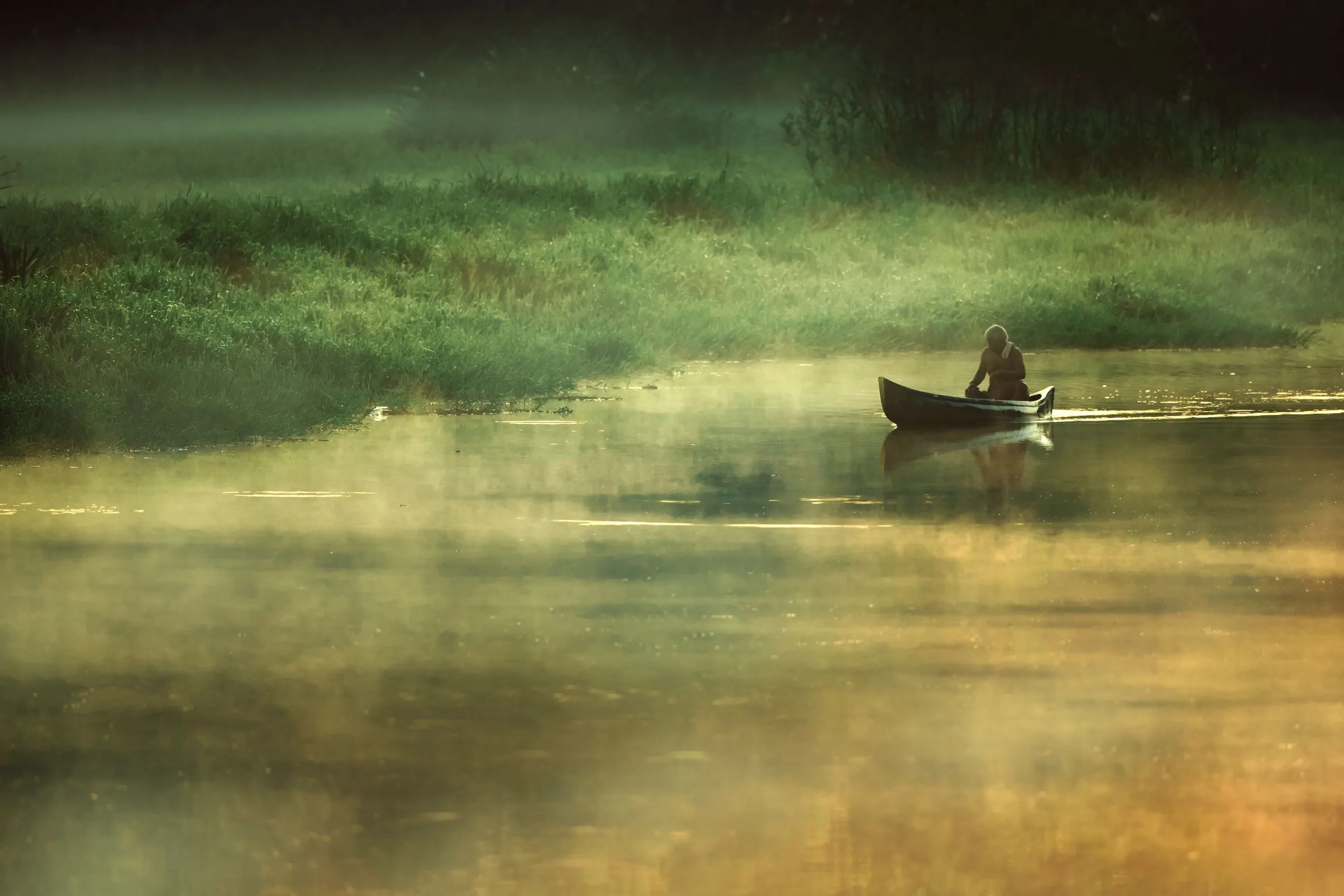
The reason to come at this time of year, though, is the mornings. Cold air sitting on water that’s still holding the summer’s warmth makes mist, and on Mere Hollow it lay so thick at 7:00 that I could hear ducks I couldn’t see. I made coffee, sat on the jetty post with my feet over the water, and waited for it to burn off. It took until nearly nine. I didn’t mind at all.
Day two: reed beds and the last lake
The southern end of Mere Hollow is a maze of reed beds with narrow open channels between them. It’s the best paddling on the whole chain: slow, quiet, and full of birds. Keep to the marked channel near the east bank, because the side channels look inviting and dead-end in mud.
The last portage into Lower Orrin is long but easy, and from there it’s a gentle 5 km paddle to the south launch, where there’s a bus stop with three buses a day back to the north end. I made the 14:20.
Shoulder-season practicalities
Things that change once the season ends:
- No hire boats. You’ll need your own boat or a hire from the town, which means a roof rack or a trailer.
- Fewer people means no help close by. Carry a whistle, keep your phone in a dry bag on your body, and tell someone your plan.
- Shorter days. In late September, I had about 11½ hours of usable light. Plan to be off the water by 17:30.
- Cold water. The lakes had dropped to around 13°C. A capsize at that temperature is serious. Dress for the water, not the air: a wetsuit or a drysuit if you’re crossing open water alone.
- The toilet blocks are locked. Bring a trowel and use it well away from the water.
Would I do it again?
I’m already planning to. Next time I’ll do it as a slow three-day trip and spend a second night on Mere Hollow, purely for another of those mornings. If you can only get away in summer, it’s still a lovely trip. Just start early, and don’t expect a campsite after lunch.