My three-season overnight kit, item by item
Every item in my pack for a spring-to-autumn night out, what it weighs, why it’s there, and the things I’ve quietly stopped carrying over the years.
Kit lists online tend to fall into two camps: the ultralight ones, where someone has cut the handle off their toothbrush, and the brand ones, where everything is new and nothing has been used. This is neither. It’s what’s actually in my pack for a single night between April and October, most of which I’ve owned for years.
I don’t name brands here, partly because models change every season and partly because the brand matters less than the type of thing and how much it weighs. Where something has a weak point I’ll say so.
Weights are what my own kitchen scale says, not the manufacturer’s figure, which is almost always optimistic.
Shelter: 1,380 g
| Item | Weight | Notes |
|---|---|---|
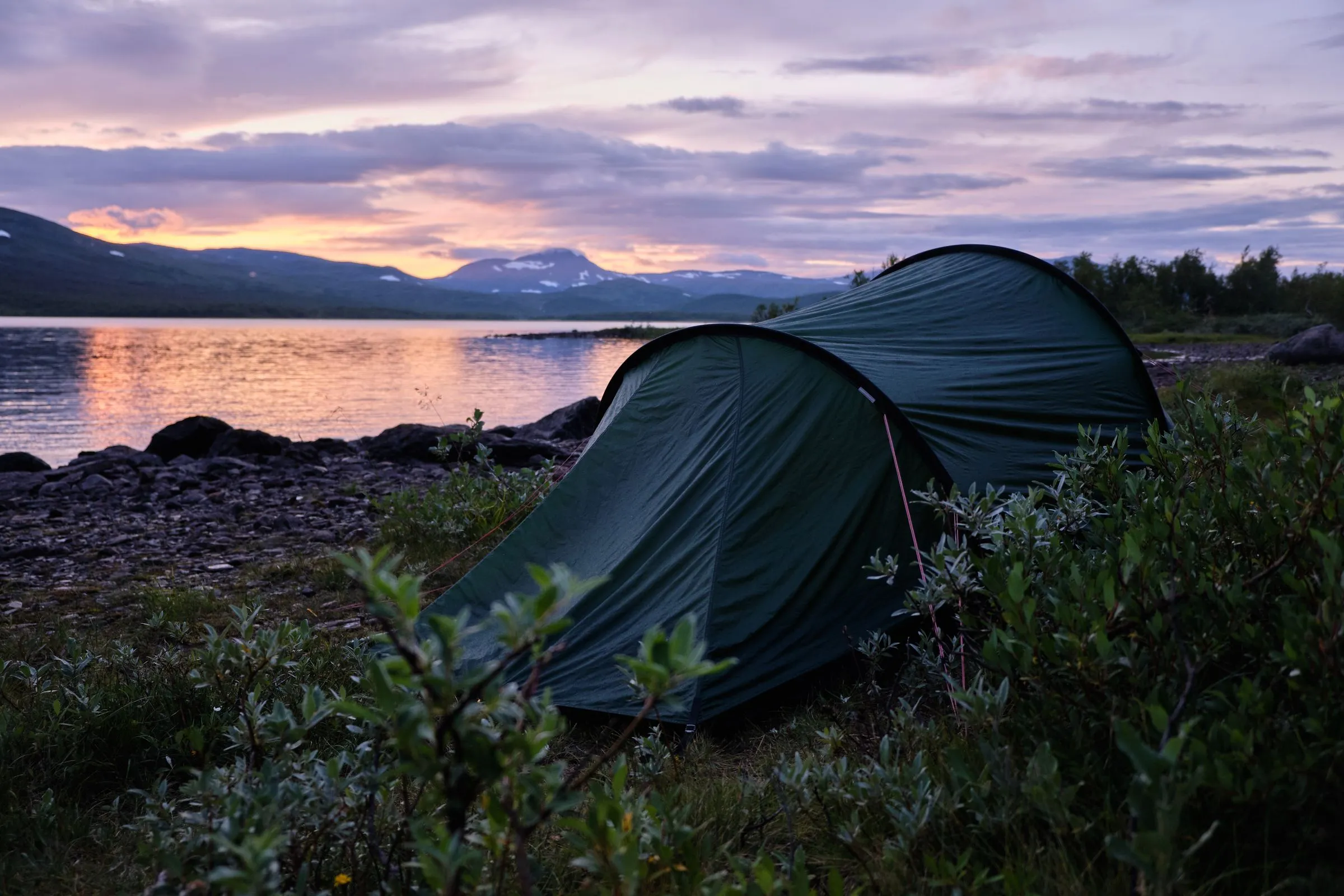
| One-person tunnel tent | 1,120 g | Two-pole, inner pitches attached. Fine in wind if pitched end-on. |
| 8 pegs (mixed V and Y) | 110 g | The supplied pegs went in the bin after one stony pitch. |
| Peg bag and spare guy line | 40 g | 3 m of line has fixed more than guy lines. |
| Footprint (cut-down groundsheet) | 110 g | Optional on grass. I take it on gravel. |
A tunnel tent isn’t the lightest choice, but it’s the one I sleep best in, because it’s quiet in wind and has room to sit up. A tent you sleep badly in is the heaviest thing you can carry.
Sleep: 1,640 g
| Item | Weight | Notes |
|---|---|---|
| Down sleeping bag, comfort 0°C | 890 g | Twelve years old, washed twice, still lofty. |
| Insulated air mat, R-value 4.2 | 520 g | The single best upgrade I’ve made. |
| Inflatable pillow | 70 g | I resisted for years. I was wrong. |
| Sleeping socks and thin hat | 160 g | Only ever worn in the bag, so always dry. |
If you take one thing from this list, take the mat. Most people who “sleep cold” have a warm enough bag and a mat that lets the ground steal all the heat. An R-value of 4 or more covers three seasons comfortably.
Kitchen: 610 g
| Item | Weight | Notes |
|---|---|---|
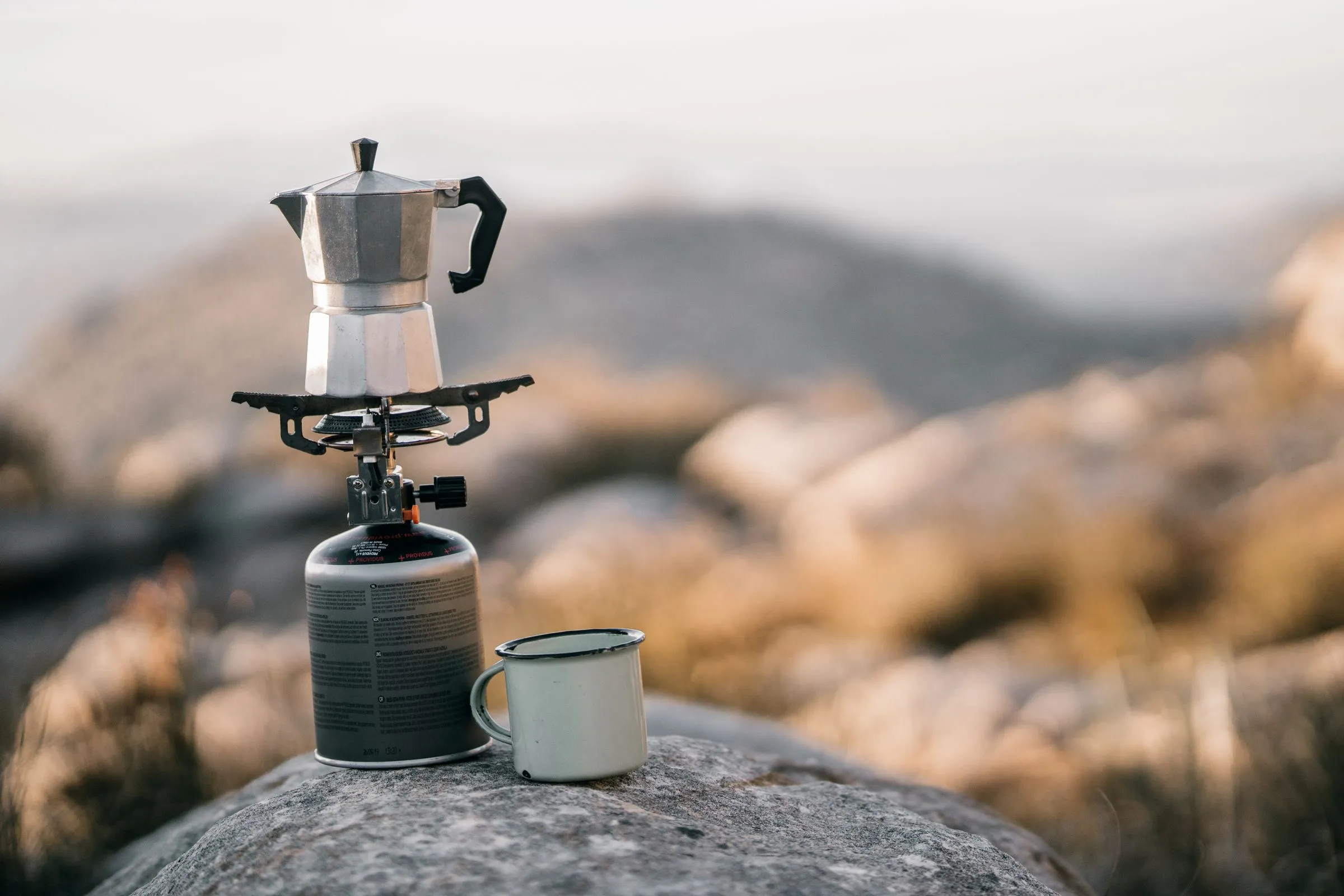
| Small gas canister (100 g fill) | 190 g | Enough for two nights of dinner and coffee. |
| Screw-on stove | 85 g | Cheap, reliable, hopeless in wind without a shelter. |
| 750 ml titanium pot with lid | 120 g | Doubles as a mug. |
| Small stovetop coffee pot | 160 g | Absolutely not necessary. Coming anyway. |
| Long spoon, lighter, cloth | 55 g | Carry two lighters. One always fails. |
The coffee pot is the indulgence. I’ve tried instant, filter bags and every other lightweight option, and none of them make the morning feel like this. That’s worth 160 g to me. It might not be to you, and that’s the point of a personal kit list.
Clothing (carried, not worn): 1,180 g
| Item | Weight | Notes |
|---|---|---|
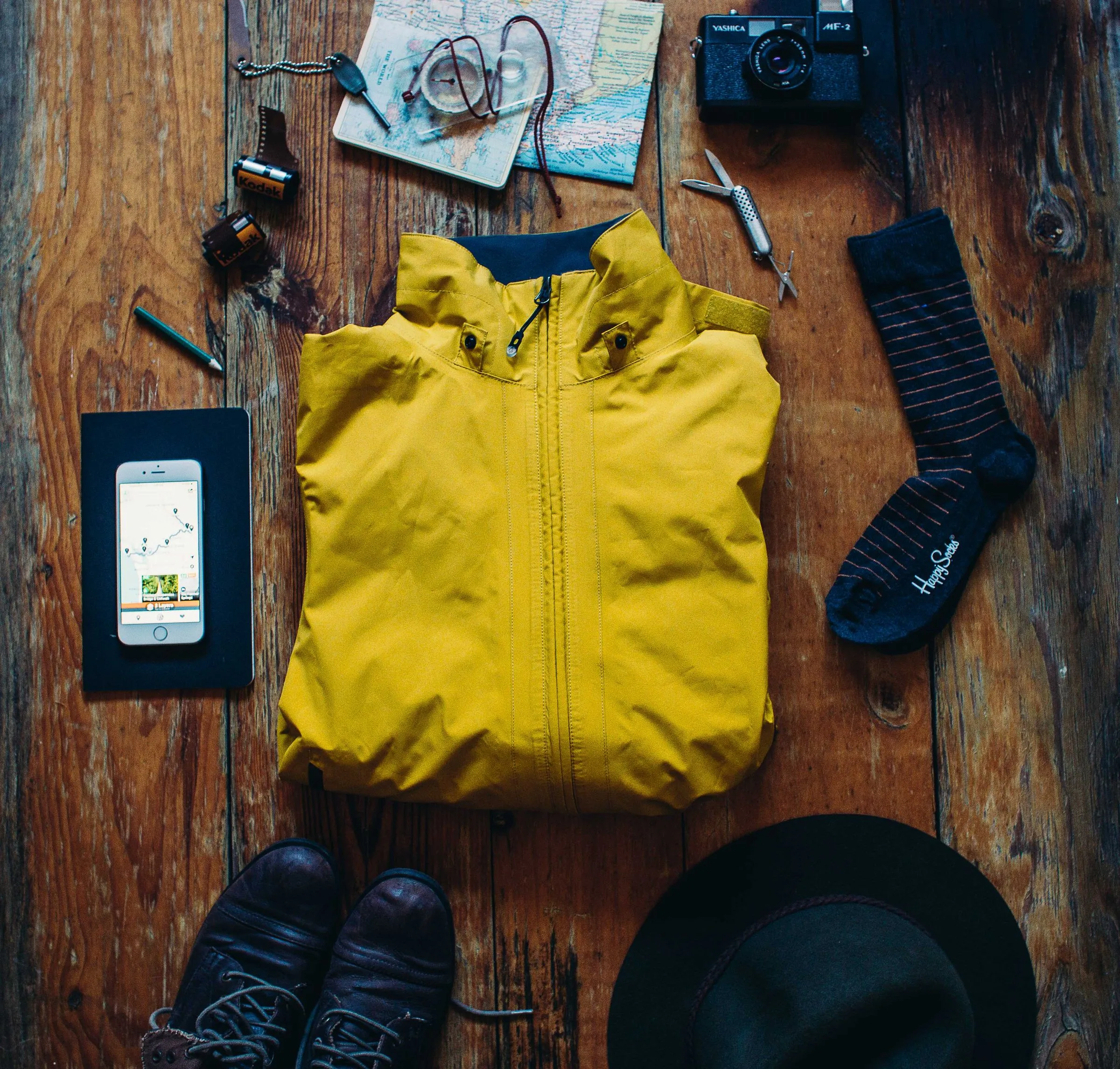
| Waterproof jacket | 340 g | Pit zips, a proper hood with a wired peak. |
| Waterproof overtrousers | 230 g | Full-length side zips so they go on over boots. |
| Insulated jacket (synthetic) | 420 g | My camp layer. Synthetic because it copes with damp. |
| Spare base layer top | 150 g | Dry thing to change into. Non-negotiable. |
| Gloves | 40 g | Thin liners. Warm hands make everything easier. |
How these layers work together is a whole post of its own: layering for cold, wet days.
Everything else: 1,590 g
| Item | Weight | Notes |
|---|---|---|
| 45-litre pack with frame sheet | 980 g | Comfortable up to about 11 kg. |
| Pack liner (a large dry bag) | 60 g | Pack covers leak. Liners don’t. |
| Headtorch | 75 g | Rechargeable, with a red light mode. |
| First aid and repair kit | 190 g | Plasters, tape, painkillers, blister kit, tent pole splint. |
| Water filter and 2 × 1 l bottles | 145 g | Squeeze filter, soft bottles. |
| Map, compass, phone, power bank | 140 g | The paper map goes in every time. |
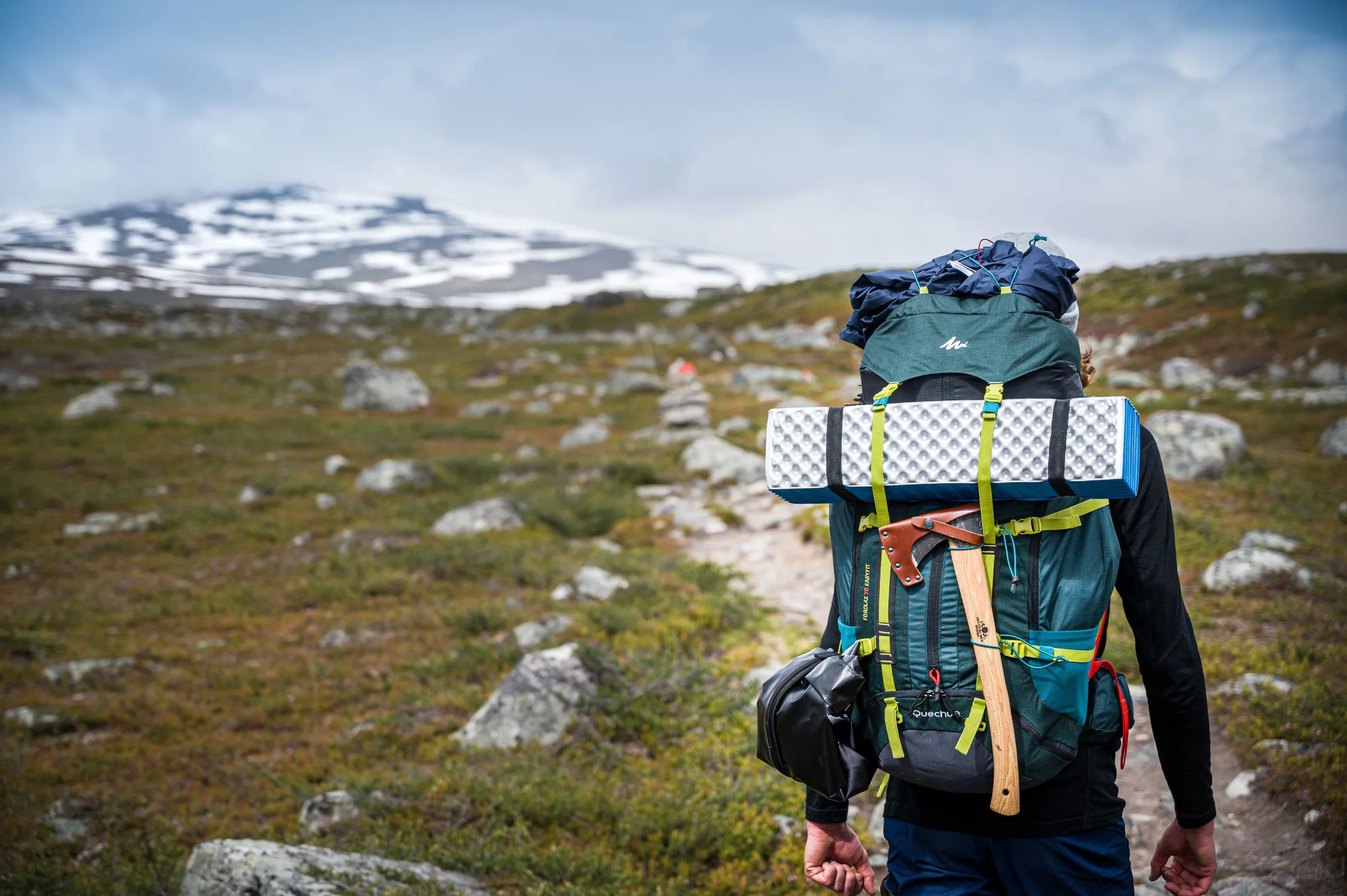
What I’ve stopped carrying
The best kit decisions I’ve made have been about what to leave at home.
- A second warm layer. One good insulated jacket does the job of a fleece and a gilet.
- Camp shoes. I loosen my boots and wear them unlaced. It saves 300 g and I’ve never missed them.
- A big knife. A small folding blade covers cheese, bread and cord.
- A full wash kit. A toothbrush, a tiny tube of toothpaste and a cloth. It’s one night.
- The “just in case” pile. If I haven’t used it on three trips, it stays home on the fourth.
How to build your own list
Weigh everything you own once, write it down, and keep that list. Then after every trip, make a mark next to anything you didn’t use. After a season, the list will tell you what to leave behind far more honestly than any review will.
And don’t buy everything at once. Start with a mat and a waterproof you trust, borrow the rest, and replace things only when you know exactly why the old one wasn’t working.