Layering for cold, wet days, without the jargon
Base, mid and shell is only the start. The real skill is when you take layers off, and almost everyone gets that the wrong way round.
The coldest I’ve ever been outdoors wasn’t on a winter summit. It was on a wet October day at about 600 m, in light rain and a steady breeze, at around 8°C. I was soaked from the inside, from sweat, by the time I stopped for lunch, and I couldn’t get warm again until I was back at the car.
That kind of day, cool, damp and windy rather than truly cold, is where layering matters most and where most people get it wrong. Here’s how I think about it now.
The three layers, in plain words
The base layer sits against your skin. Its only job is to move sweat away from you so you stay dry. Merino wool or a synthetic fabric. Never cotton, which holds water and chills you fast.
The mid layer keeps you warm by trapping air. A fleece, a light synthetic jacket, or a thin wool jumper. You’ll take this on and off more than anything else.
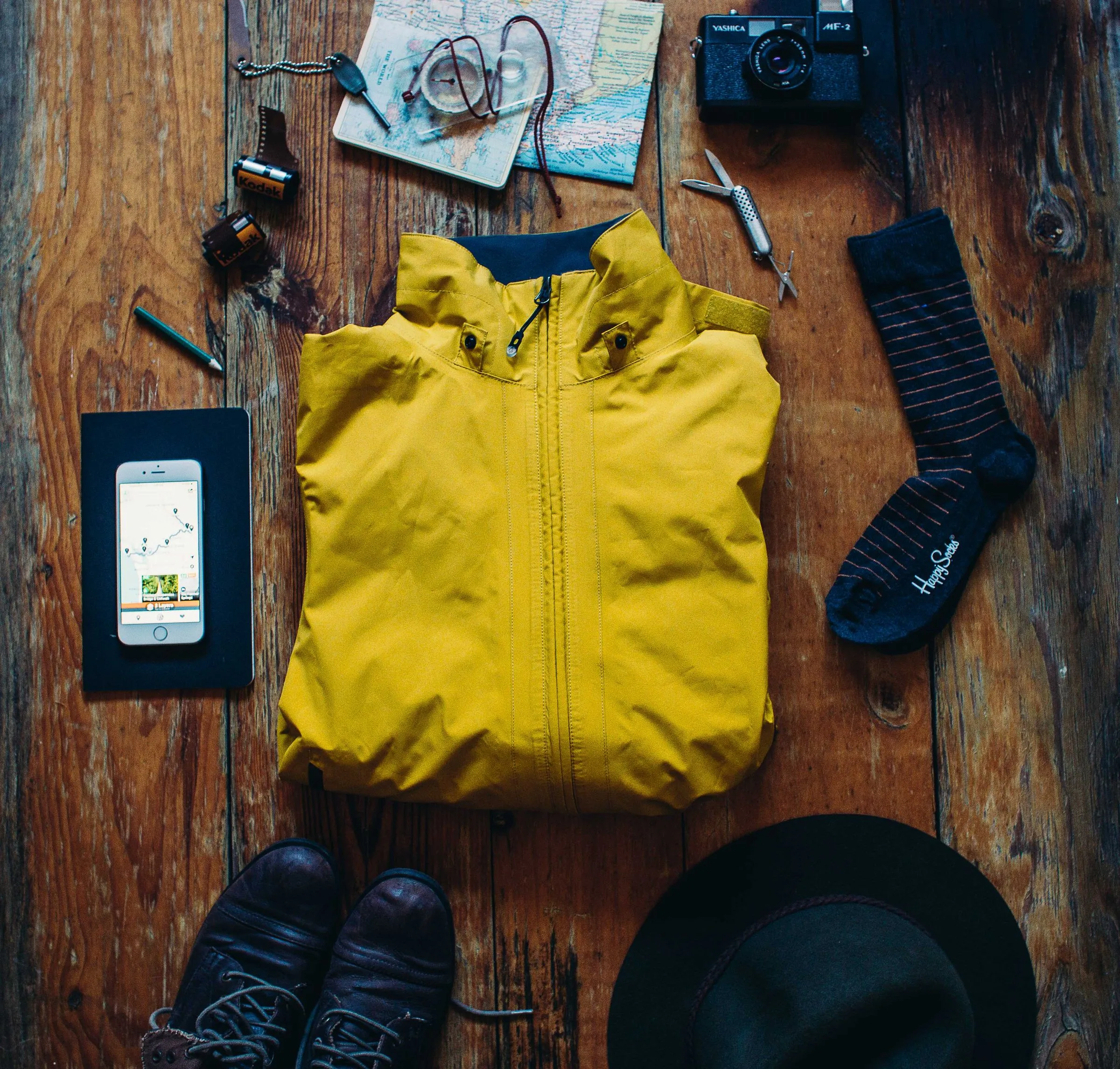
The shell keeps wind and rain off. A waterproof jacket, and waterproof trousers in persistent rain. It does very little to keep you warm on its own, and that’s the part people forget.
Then there’s a fourth layer that isn’t part of the system while you’re moving: the camp layer. A warm insulated jacket that only goes on when you stop. It lives at the top of your pack, and it stays dry because you never walk in it.
Start slightly cold
This is the single most useful habit I have. When you leave the car, you should feel a little too cold. Within ten minutes of walking uphill, you’ll be exactly right.
If you start warm, you’ll be sweating by the first stile. Sweat in the base layer is how a wet day becomes a cold day: once you stop moving, that damp fabric pulls heat out of you far faster than the air does.
The waterproof problem
Here’s the counter-intuitive part. On a climb in light rain, you’ll often be warmer and drier in a base layer and a windproof, or even a base layer alone, than in your waterproof.
Even the most breathable waterproof can’t move sweat out as fast as you make it when you’re working hard uphill. So you get wet anyway, from the inside. The rain soaking a thin base layer is often less water than the sweat trapped under a shell.
What I do:
- Climbing in light rain or drizzle: base layer, sleeves pushed up. Shell in reach.
- Climbing in proper rain: base layer and shell, pit zips open, front unzipped as far as I can stand.
- On the top, in wind: shell on before you feel cold, not after.
- Stopping for more than five minutes: camp layer on, over everything, immediately.
Hands, head and feet
These are where you feel cold first, and they’re the cheapest to fix.
- A thin hat makes a remarkable difference on a windy top. Take it off on the climb.
- Two pairs of gloves beat one thick pair. Thin liners for walking; a waterproof pair for the tops. Wet gloves are worse than no gloves.
- Dry socks for camp or the car. Always. Feet are where morale goes first.
When it goes wrong
If you start shivering and can’t stop, that’s your body telling you something important. Stop, get the camp layer on, get out of the wind behind a wall or a boulder, eat something sugary, and drink something warm if you have it. Then head down.
Shivering, clumsy fingers and feeling oddly flat or irritable are early signs of getting too cold. They’re much easier to fix at the first sign than half an hour later.
A wet-day checklist
Before any day where rain is forecast:
- Base layer (not cotton), and a spare in a dry bag.
- Mid layer you can take off and on easily.
- Waterproof jacket with a hood that actually fits over a hat.
- Waterproof trousers with side zips.
- Insulated camp layer, kept dry.
- Thin hat, liner gloves, waterproof gloves.
- A flask, and more food than you think you need.
It’s not glamorous, and none of it is new. But wet days are where the boring decisions add up, and getting them right is the difference between a miserable day out and a good one in bad weather. If you’re heading out overnight, my three-season kit list shows how these layers fit in a pack.