Why I climb the same small hill every month
Brack Hill is 412 metres high, twenty minutes from my door by bus, and not in any guidebook. I’ve climbed it once a month for six years.
Brack Hill is 412 metres high. It has a trig point, a broken wall, a fence with a stile that wobbles, and a view of a reservoir, a motorway and, on a clear day, the higher hills to the north. It isn’t in any guidebook. Nobody has ever driven a long way to climb it.
I’ve climbed it on or around the first Saturday of every month for six years. I’ve missed four. That’s sixty-eight climbs of the same small hill, by the same path, give or take a detour.
It started as a deal with myself
I began in a year when I wasn’t getting out much: a new job, a lot of evenings at the desk, and a general sense that the big trips I kept planning weren’t happening. Brack Hill is twenty minutes from my door on the 12 bus, and an hour up and down. It seemed like a small enough promise to keep.
It turned out to be the most useful walking habit I’ve ever formed, and not for the reasons I expected.
You start to see the year
When you walk somewhere once, you see a place. When you walk it every month, you see time.
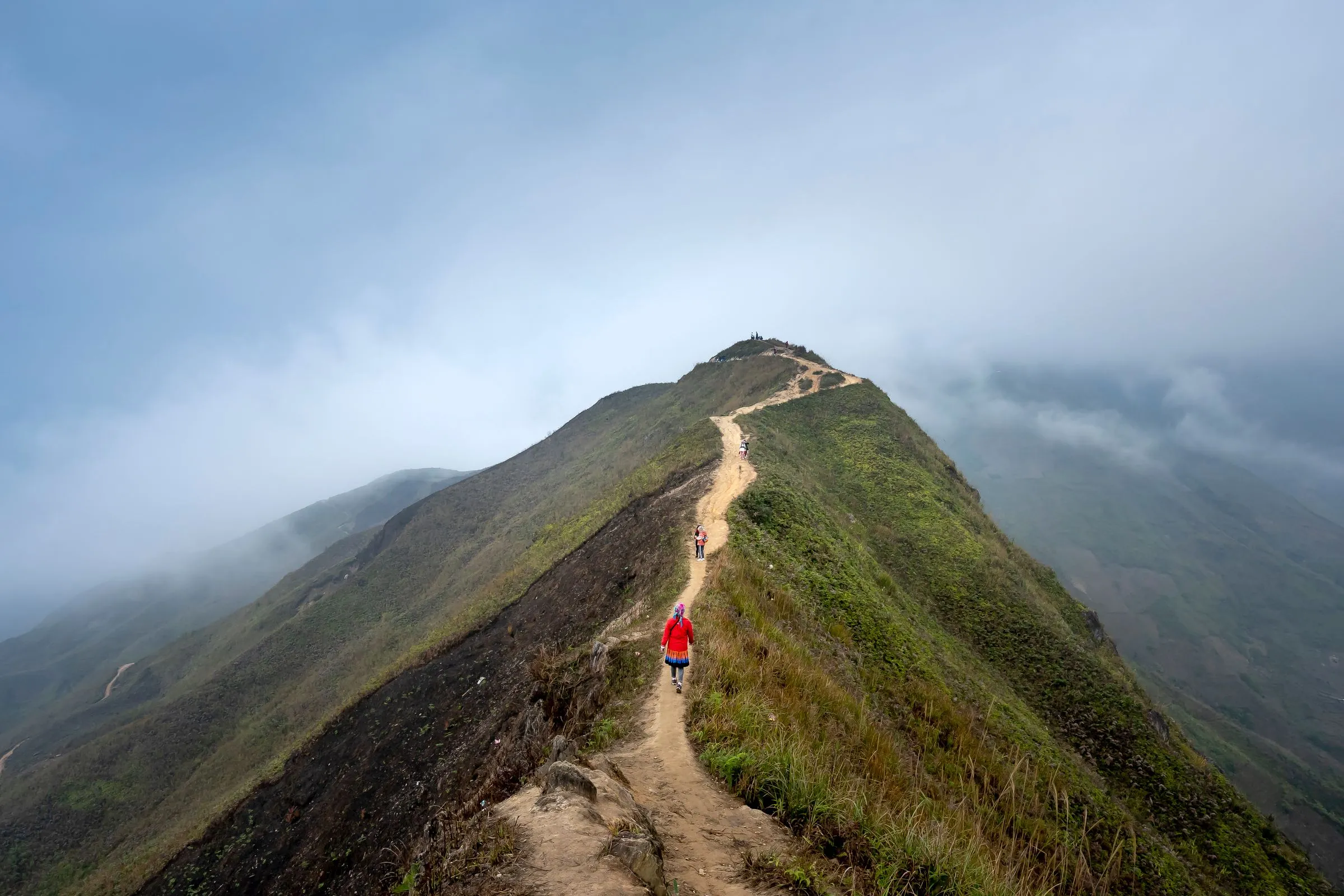
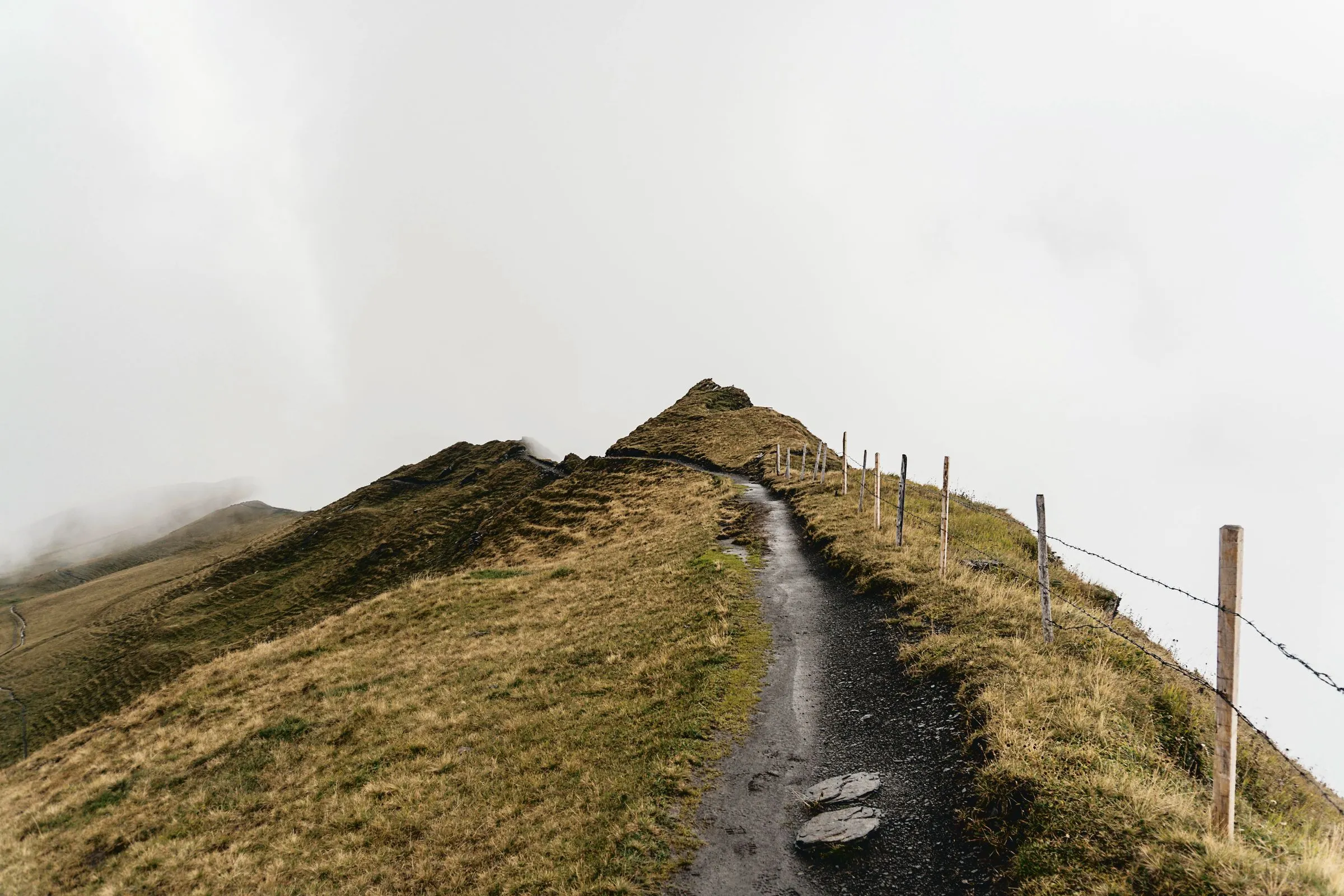
In January the path is a stream, the fence posts carry rime, and the reservoir is the colour of slate. By March there are lambs in the bottom field, loud and alarmed by everything. In May the bracken uncurls along the wall, fast enough that it looks different week to week. In August the top smells of hot grass and sheep, and on most evenings someone is up there with a flask watching the sunset. In October the birches in the gully turn the colour of the lichen on the trig point. In December it’s often in cloud, as it was in the photograph at the top of this page, and the only way to know you’ve reached the top is that the path stops going up.
None of these things are remarkable. But after six years they’re as familiar as a friend’s face, and I notice when something is late or early or wrong.
Fitness, without trying
The second thing I didn’t expect: Brack Hill became my measure. It takes me 34 minutes from the stile to the trig point on a normal day. If it takes 40, I’ve been at my desk too much. If it takes 30, I’m ready for something bigger.
That’s far more useful than any fitness app, because it’s the same hill, the same path, and the same me, measured once a month for years.
It makes the big trips better
You’d think walking the same small hill would make bigger places feel more exciting by contrast. It does, a bit. But mostly it’s made me better at noticing things on the big trips too: the plants, the weather coming, the way a path changes after rain. Brack Hill trained my attention on a small scale, and it works just as well on a large one.
When I wrote about three days on the Skellan Ridge, half the notes I took were things I only knew to look for because of a hill twenty minutes from home.
Find your own small hill
You almost certainly have one. A hill, a stretch of river, a wood, a bit of coast. Somewhere you can get to in under half an hour without much planning. It doesn’t need to be beautiful. Brack Hill has a motorway view.
Go once a month, on roughly the same day. Take the same path. Notice one thing that’s changed since last time, and maybe write it down. After a year, you’ll know a place properly, and that turns out to be rarer and better than knowing a lot of places a little.